He’s right. Buying stocks is the best way to hedge inflation and is “free money”. I have been telling readers–all dozens of them–to buy stocks on the dips:
The American stock market just prints you free money if you buy into it
A certain type of person is immune to being convinced that they too can just do this if they want. Everyone can and should just go collect their free money https://t.co/y2Dp76Sv5B pic.twitter.com/ZEodMpMoTP
— Lost Nomad (@lost_nomad__) May 1, 2026
As I correctly predicted in November 2025 in the post, “Don’t expect Trump to do anything about healthcare costs, inflation, or student loan debt,” affordability is not going to get better and is a low priority. I reiterated this in the March 14th 2026 post, “Foreign policy takes precedence over domestic issues.” The implicit messaging by the administration is to “buy stocks or earn more money.” Those are your only options to affordability.
The President is powerless to make things more affordable, even if he wanted to. If given a choice between recession and lower prices, or high prices and a booming economy and stock market, the latter is always preferrable. Healthcare too expensive? Tough shit, as it’s said.
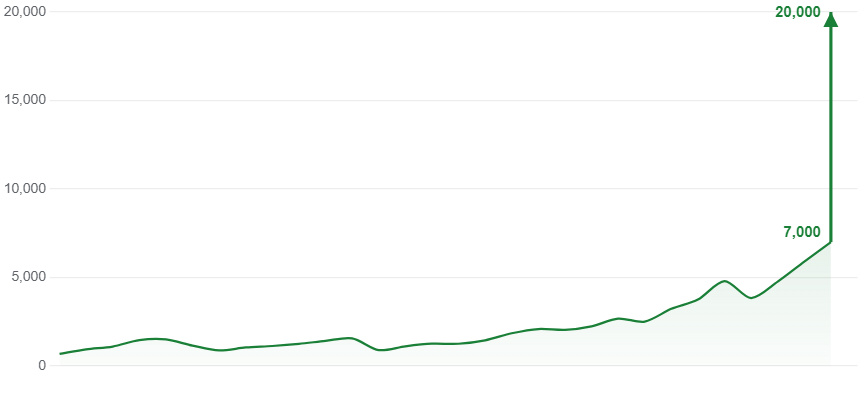
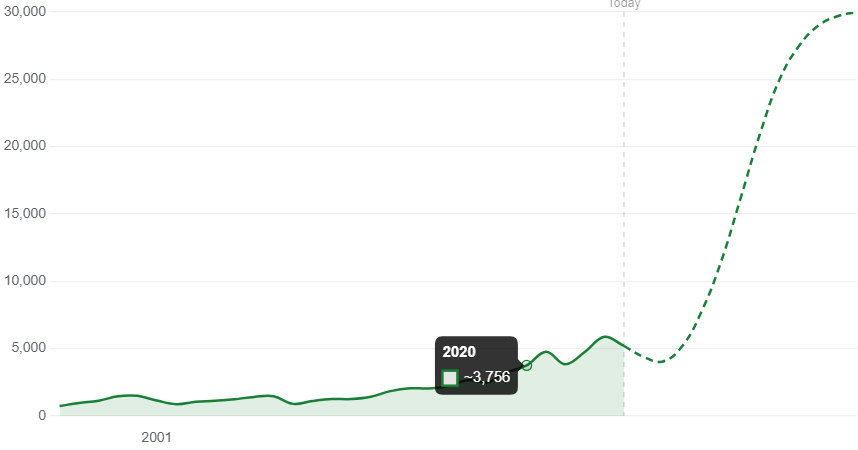
Speaking of stocks, the market is going vertical, possibly in anticipation of AGI, as I said in the August 2025 post “Investing for AGI/takeoff“. The market will rally 50-100% in a year in anticipation of massive gains in productivity and earnings on the horizon from AI. It will take years for the productivity to finally be reflected in earning reports, at which point the stock market will have gone up 5-10x.
After the window closes, it will be too late, as future earnings will have been priced in. So this means having to act now. I have bought out of money call options on index funds in anticipation of AGI, in accordance with my post. We could conceivably see the S&P 500 gaining 1% a week and the Nasdaq 2%/week for the rest of the year, or about 100% return. Very unlikely, yes, but not zero.
The S&P 500 chart will resemble this:
This will transition to a logistic curve pattern after the future growth is priced in:
So far for 2026, like in 2025 regarding the tariffs, all my Iran and stock market predictions are coming true. Richard Hanania tweeted yesterday:
Basically, the outcome of the war with Iran has been
1) Hormuz remains closed
2) The economy (stock market) is doing fineI didn't see anyone predicting this. People critical of Trump said Hormuz would stay closed and it would be a disaster. His defenders also assumed he needed…
— Richard Hanania (@RichardHanania) May 5, 2026
AFIK, I was the only one who got all these right, predicting stocks would ignore high oil prices and the strait being closed. I predicted that the strait would be closed or blockaded longer than expected–and that the public, the stock market, and the economy would quickly move on due to the issue becoming increasingly confused and muddled by overlapping “deals” and “negotiations”.
As mentioned in my prescient April 10th post, “Diplomacy by Delay,” it is the same pattern as seen during the 2025 tariffs—there were all these deals, penalties, and deadlines concurrently over many countries, and everyone was unable to keep track of it all, and it became like background noise. Nothing is ever resolved, but the public and the market stops caring.
Recall in 2025 during the tariffs I correctly predicted stocks would surge and there would be no inflation spike. A year later, the CPI has not budged. Pundits were predicting economic catastrophe due to the tariffs, but zooming out, you wouldn’t even notice:

The liberal media was forced to concede that the awaited or “inevitable” tariff inflation surge never came to be, with the NYTs in January 2026 asking, “Why Haven’t Trump’s Tariffs Had a Bigger Impact?” Here is what I wrote in my August 2025 post, “Why the Trump tariffs were a nothing-burger:”
The U.S. economy is driven by upper-middle class people with tons of disposable income who want to splurge on dining and other services. They are not going to be dissuaded by some tariffs. Moreover, imports are only a small percentage of the final price of a good. For a cup of coffee at Starbucks, for example, the cost of the raw beans is small relative to the marketing and labor. You’re paying for all the marketing and labor, not the raw good. Starbucks only pays $1.20/pound for the beans, yet a cup costs easily $4 or more.
The same logic also applies to rising oil prices. As usual, the same people who were wrong in 2025 are predicting a repeat here. From my post, “Update on Iran: Why I remain bullish on stocks and bearish on Bitcoin:”
The largest of retailers like Walmart, or tech behemoths like Google are unaffected by Iran. Inflation will not go up as much as expected because the price of oil only factors a little into the final sticker price of a sold good. A similar pattern was seen in 2007-2008 when oil prices surged but CPI-based inflation remained low:
Oil’s contribution to the final cost of a good is small. Outside of gas prices, oil does not effect CPI that much. Same for tariffs, which only contributed little to the sticker price. Between 2007-2008, the annual growth rate of the CPI increased from only 2.5% to as high as 5.5% despite oil going up 7x from $20 to $140. People get mad when you point this out. Keep seething.
What about the strait remaining closed? I was right too. From CNBC, “Traffic in the Strait of Hormuz won’t return to normal until August or later, according to Kalshi traders:”

All forecasts for the strait traffic returning to normal have been pushed back, versus a month ago when people assumed a speedier resolution. Recall, I originally predicted the strait being closed or otherwise blockaded until 2028, coinciding with the election. From an April 2026 post, I wrote:
Given these choices, the strait will remain closed for far longer than widely assumed, or even until after 2028 election. Trump has boxed himself in. NATO is not going to do anything. What was assumed to be an easy campaign has turned into something of a quagmire. But stocks will recover anyway despite oil above $100, as I also predicted. Consumer spending is not going to be affected much.
The reality is, as I correctly noted months ago, is that Iran is taking it surprisingly well despite its leaders being killed. Surging oil enriches Iran and its allies, and makes Trump look bad, so they are in no hurry to make a deal, or to retaliate much either. They are perfectly fine just dragging things out in a sort of stalemate, with the occasional isolated attack to boost oil prices, until after the election. NATO does not want to get involved either, and are fine watching Trump dig himself in a deeper hole.